When people hear the term “venous ulcer,” they often picture an open sore on the lower leg. Well before this symptom appears, several factors work together to compromise the skin’s integrity.
In many cases, a venous ulcer results from changes that develop beneath the surface over time. These changes often go unnoticed until the skin can no longer withstand the pressure. By the time a wound appears, the condition has usually been present for longer than most patients realize.
At Vein Specialists of the South, care is focused on identifying these early patterns to help you manage circulation issues before they progress, supporting your journey toward long-term vein health.
What Is a Venous Ulcer?
A venous ulcer is an open sore that develops on the lower leg or ankle due to underlying vein disease. When the valves inside your veins stop working properly, blood begins to flow backward instead of moving up toward the heart. This is known as venous reflux.
Over time, this backward flow creates pressure inside the veins. That pressure leads to swelling and inflammation in the surrounding tissues and limits the oxygen and nutrients your skin needs to stay healthy. As a result, the skin becomes weaker and more vulnerable to damage.
What Are 7 Early Signs You May Be Developing A Venous Ulcer?
Before a venous ulcer forms, the body often shows clear signs that something is changing beneath the surface. These signs may develop gradually and may not seem connected at first, but they often reflect increasing pressure in the veins and changes in how blood is circulating through the lower legs. Recognizing these early patterns can help you understand what your body is signaling and when it may be time to seek evaluation.
Swelling That Gets Worse Throughout The Day
Swelling is often the first noticeable change. It may start subtly, with tighter shoes in the evening, mild ankle puffiness or sock marks that linger longer than usual. This happens when fluid is not moving efficiently out of the lower legs.
Over time, that pressure can affect skin health and increase the risk of tissue damage. Swelling is often one of the earliest signs of venous disease and is commonly accompanied by heaviness or tightness.
A Heavy, Aching Or Tired Feeling In Your Legs
Many patients describe this as a dragging sensation. Your legs may feel fatigued, achy or heavy, especially as the day goes on. One key sign to look for is whether symptoms improve when elevating the affected leg, which often indicates a circulation issue.
These symptoms often reflect increasing pressure in the veins, signaling that your circulation is struggling to efficiently move blood back toward the heart.
Visible Varicose Veins
Varicose veins are often one of the most recognizable signs of underlying vein disease. These enlarged, twisted veins develop when blood pools instead of flowing properly. While they may seem like a purely cosmetic issue at first, they actually indicate increased pressure within the veins.
Over time, this added pressure can worsen symptoms and increase the risk of complications, including skin changes and ulcer formation.
Skin Discoloration Near The Ankle
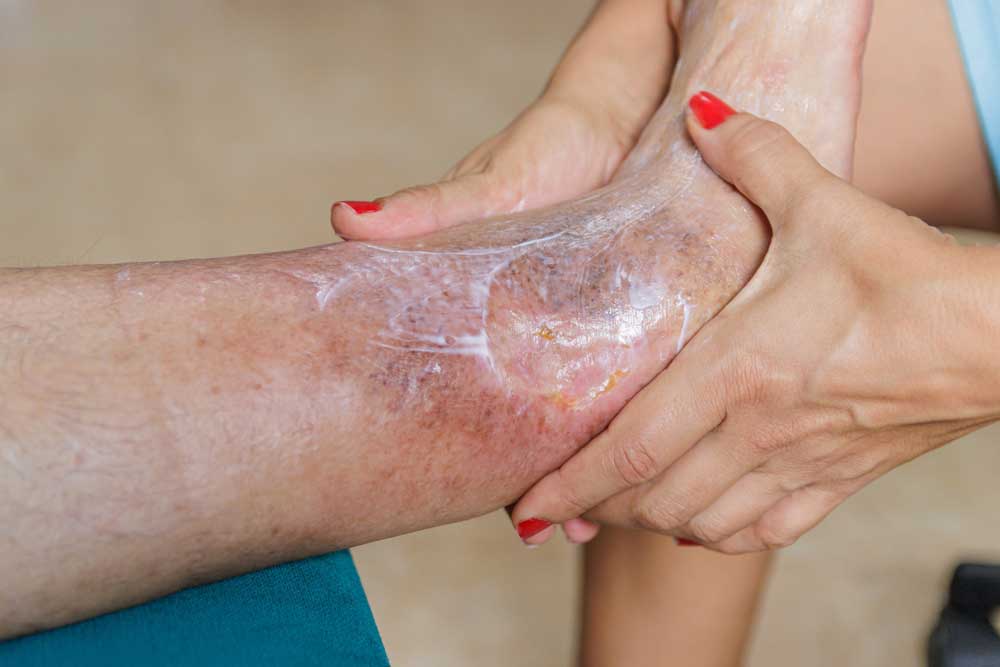
Changes in skin color are an important early warning sign. You may notice reddish-brown or darkened areas near the ankle. This occurs when venous blood pools in your legs, causing inflammation that damages the surrounding tissue and skin.
At this stage, the skin is already under stress and more vulnerable to breakdown.
Itchy, Irritated Or Eczema-Like Skin
This symptom is often mistaken for simple dryness. It may actually be venous eczema, caused by inflammation and poor circulation. Symptoms can include itching, redness and irritation. Over time, this can weaken the skin and increase the risk of breakdown.
Skin That Becomes Thick, Tight Or Hardened
As venous disease progresses, the skin may begin to change in texture. It can feel firm, tight or thickened, and may appear shiny. These changes reflect ongoing inflammation and reduced tissue health.
A Sore That Does Not Heal Properly
A slow-healing wound near the ankle is a key warning sign. It may reopen, drain or become tender over time. Some wounds may also develop odor, warmth or redness. Without proper treatment, these areas can progress into venous ulcers and become more difficult to manage.
Treatment Options For Venous Ulcers
Treating a venous ulcer is not just about closing the wound. It requires addressing the underlying vein condition that caused it. At Vein Specialists of the South, care is focused on both healing the skin and correcting venous reflux to reduce the risk of recurrence.
Evaluation And Diagnosis
Treatment begins with a detailed evaluation, often including a vascular ultrasound to assess blood flow and identify areas of reflux or blockage. Understanding the source of the problem is essential for lasting results.
Supporting The Healing Process
Proper wound care helps create the right environment for healing. This includes protecting the wound, managing drainage, and preventing irritation to the surrounding skin.
Compression therapy is also a key component. By improving blood flow and reducing venous pressure, compression supports healing and helps control swelling.
Treating The Underlying Vein Issue
Once the cause is identified, treatment focuses on improving circulation. Minimally invasive procedures can close or redirect damaged veins, allowing blood to flow more efficiently and reducing pressure in the lower legs. These treatments are performed in-office and are designed for faster recovery.
Long-Term Management
Healing the ulcer is only part of the process. Ongoing care, including compression and monitoring for early symptoms, helps reduce the risk of recurrence and maintain healthy circulation.
Take The Next Step Before Symptoms Progress
Venous ulcers do not develop overnight. They are the result of changes that build over time. Most venous leg ulcers will heal with good wound care, elevation, and graduated compression. However, getting the ulcer to heal is only the first step. Studies show that venous ulcers are likely to recur within a year or two if you don’t correct the underlying vein problem.
Swelling, heaviness, skin discoloration, and slow healing are not just minor concerns. They are early signs that your circulation may not be functioning properly. The sooner these symptoms are evaluated, the more options you have to prevent progression and protect your skin.
At Vein Specialists of the South, care is focused on identifying the source of your symptoms and creating a treatment plan that supports long-term vein health. With decades of experience and a dedicated focus on vein and lymphatic conditions, the team is equipped to guide you at every stage. Call (478) 743-2472 or complete our online form to schedule your consultation and take the next step toward Better Veins for Life®.