The Answer May Be a Circulation Problem, Not the Wound Itself
If you have a wound on your lower leg that just won’t heal, you’re probably frustrated, discouraged and maybe even a little worried. You may have tried creams, dressings, antibiotics or months of wound care, only to watch the sore reopen or refuse to close.
Here’s the encouraging part: the wound itself may not be the real problem. In many cases, the underlying cause is poor circulation from damaged leg veins, a condition known as a venous ulcer. Once that circulation problem is identified and treated, your body often has a far better opportunity to finally heal.
At Vein Specialists of the South, we focus on finding the vein condition driving a slow-healing wound, helping you improve circulation and reducing the risk that the ulcer returns.
What Is a Venous Ulcer?
A venous ulcer is an open sore that usually develops on the lower leg or near the ankle because blood isn’t flowing efficiently back to the heart. This happens with chronic venous insufficiency, a condition in which the one-way valves inside your veins stop working properly. Instead of moving blood upward, the valves allow it to flow backward and pool in the legs.
Over time, that backward flow raises the pressure inside the veins. The surrounding tissue becomes inflamed, swollen and starved of the oxygen and nutrients healthy skin needs. As the pressure keeps building, the skin weakens and eventually breaks down into a wound that’s slow to heal. These ulcers most often appear near the ankles, and they’re usually preceded by symptoms that were present long before the sore itself.
Why Venous Ulcers Struggle to Heal
Healthy wound healing depends on good circulation. Your body relies on steady blood flow to deliver the oxygen, nutrients and infection-fighting cells that repair damaged tissue. When blood pools in the lower legs, that healing process slows dramatically. Even if the skin closes for a while, the wound often reopens because the underlying vein disease is still active. Treating the wound alone usually isn’t enough.
Several factors keep venous ulcers from healing:
Persistent venous pressure. Damaged valves let blood collect in the lower legs instead of flowing upward, creating chronic pressure that continually stresses the surrounding tissue.
Swelling and fluid buildup. When circulation is poor, fluid accumulates in the legs. That swelling stretches the skin, weakens the tissue and makes healing harder.
Reduced oxygen delivery. Poor circulation limits the oxygen reaching the skin, and without enough oxygen, the body struggles to repair the area.
Chronic inflammation. Venous disease causes ongoing inflammation in the skin and blood vessels that damages healthy tissue over time and raises the risk of breakdown.
Repeated skin breakdown. Even a wound that starts to improve may reopen again and again until the underlying vein problem is corrected. This is a major reason venous ulcers become chronic.
Dr. Harper’s Clinical Insight
One of the most common things I hear from patients is, “I’ve been treating this wound for months, but it just won’t heal.” In many cases, the wound is only the visible symptom. The real problem is chronic venous insufficiency. Treating the circulation problem often gives the body the opportunity it needs to heal, and it helps reduce the risk of the wound returning.
— Dr. Kenneth Harper
Early Signs of Venous Disease
Venous ulcers rarely appear out of nowhere. In most cases, the body sends warning signs long before the skin breaks down, and recognizing them early can help you treat the circulation problem before a wound ever develops.
Swelling in the lower legs. This is often one of the earliest signs of venous insufficiency. You might notice puffy ankles, shoes that feel tight by evening or sock marks that linger.
Heavy, aching legs. Many people describe a tired, heavy or aching feeling, especially after standing for long periods, that eases when they elevate their legs.
Varicose veins. Visible varicose veins are a sign that blood isn’t flowing properly, and the added pressure can worsen circulation over time.
Skin discoloration. The skin near the ankles may turn reddish-brown or darker as blood pools beneath the surface, a sign of ongoing inflammation.
Itchy or irritated skin. Poor circulation and chronic inflammation can cause dry, itchy or eczema-like skin changes.
Thickened or tight skin. As venous disease progresses, the skin may become firm, shiny or hardened.
Slow-healing sores. A sore that heals slowly or keeps reopening may mean circulation problems are interfering with tissue repair.
How Venous Ulcers Are Treated
Treating a venous ulcer means healing the wound and addressing the circulation problem behind it. We build each plan around your symptoms, your vein health and your circulation needs.
Evaluation and Diagnosis
Your evaluation begins with a careful review of your symptoms and medical history, followed by a venous duplex ultrasound in our IAC-accredited vascular lab. This noninvasive test lets us pinpoint damaged veins, map abnormal blood flow and find the source of the increased pressure. Understanding that cause is what allows us to recommend the right treatment for you.
During your visit, we’ll listen to your concerns, examine your legs, review your ultrasound findings and explain everything in plain language. You’ll get personalized recommendations, time to ask questions and a clear sense of whether minimally invasive treatment can help. Many medically necessary vein treatments are covered by insurance, and our team will help you understand your benefits.
Your care is led by Dr. Kenneth Harper, one of the first physicians in the country to earn Diplomate status with the American Board of Venous and Lymphatic Medicine and board-certified by the American Board of Surgery. With more than 25 years devoted to comprehensive vein care, our team brings a depth of experience few practices can match.
Wound Care and Compression Therapy
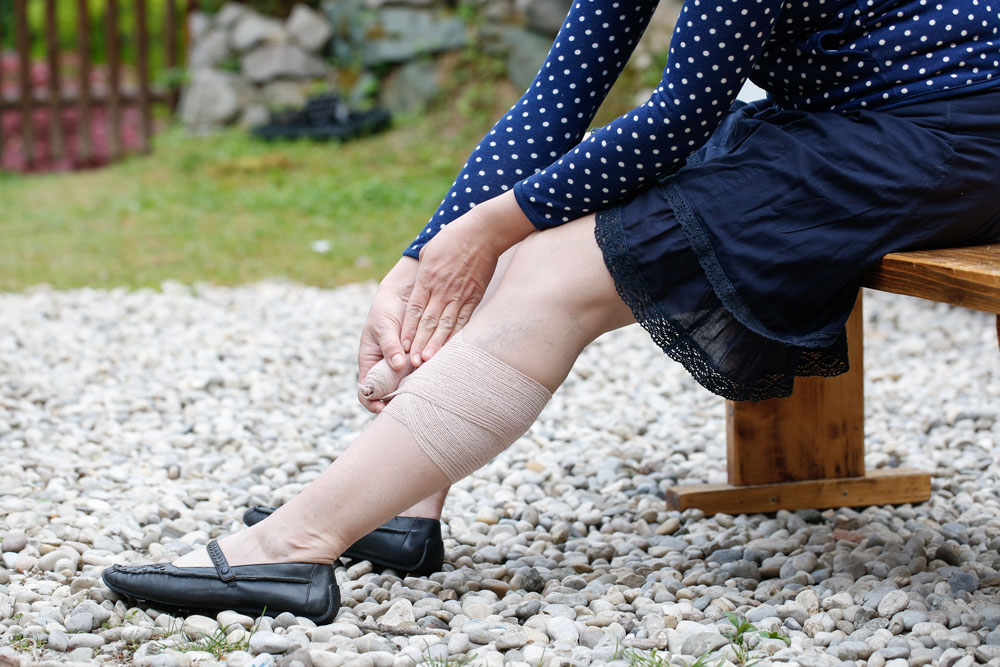
Proper wound care protects the skin and supports healing, and dressings can help manage drainage and reduce irritation. Compression therapy is another key piece: compression stockings or wraps improve circulation, reduce swelling and lower the pressure inside your veins.
Treating the Underlying Vein Problem
Minimally invasive procedures improve blood flow by closing or redirecting the damaged veins, which reduces venous pressure and supports lasting healing. Depending on your condition, options may include:
- Endovenous laser treatment (EVLT)
- Radiofrequency ablation
- Ultrasound-guided sclerotherapy
- Other minimally invasive vein procedures
These are Walk-In, Walk-Out® procedures performed right in our office and designed for minimal downtime.
Long-Term Vein Health Management
Healing the ulcer is only part of the job. Ongoing circulation care is what keeps it from coming back. Long-term management may include wearing compression garments, staying active, elevating your legs when you can, watching for early symptoms and keeping up with routine vein evaluations.
What Happens If You Wait?
Without treatment, venous ulcers tend to grow larger and become harder to manage. The longer poor circulation goes uncorrected, the greater the risk of complications, including:
- Infection
- Increasing pain and tenderness
- Chronic drainage from the wound
- Reduced mobility
- Permanently thickened or damaged skin
- Recurrent ulcers
- Worsening inflammation and swelling
Many patients also find the discomfort starts to interfere with walking, exercise, work and everyday life. Because venous ulcers stem from chronic vein disease, simply covering the wound usually isn’t enough to keep it from coming back.
There Is Hope
The encouraging news is that many venous ulcers improve significantly when both the wound and the underlying vein disease are treated together. Modern vein care corrects the circulation problem at its source while supporting the wound as it heals, which is exactly how we approach it at Vein Specialists of the South.
Frequently Asked Questions
Can a venous ulcer heal on its own? Sometimes it improves temporarily, but lasting healing is much less likely if the underlying vein disease isn’t treated.
Will I need surgery? Most patients are candidates for minimally invasive office procedures rather than traditional surgery.
Will the ulcer come back? Treating the underlying vein problem greatly reduces the risk of recurrence, though long-term vein care remains important.
Should I wear compression stockings? Compression is often an important part of treatment, but it works best when combined with treatment of the underlying vein disease.
When should I schedule an evaluation? If you have a wound that’s slow to heal or keeps returning, or you notice swelling, varicose veins or skin discoloration, you should be evaluated promptly.
Don’t Ignore the Warning Signs
Your body may be trying to tell you something. Swelling, aching legs, skin discoloration and slow-healing wounds aren’t just signs of aging. They’re often signs of an underlying circulation problem that can be treated.
If you have a wound that won’t heal or symptoms of chronic venous insufficiency, schedule an evaluation with Vein Specialists of the South. We’ll identify the cause, explain your options and build a personalized plan designed to help you heal and stay healed.
Call (478) 743-2472 or complete our online contact form to take the next step toward Better Veins for Life®. We’ll see you at our Macon or Warner Robins location.