Painful, slow to heal and unsightly, venous ulcers are a potentially serious health complication that requires expert treatment. Thankfully, venous ulcers are completely preventable, but it is up to the patient to take the first step and seek out treatment. This means recognizing the several signs that lead up to venous ulcers, which are the end result of a multi-step process.
Our team at Vein Specialists of the South believes that prevention, when possible, is always the best approach when addressing vein disorders that can lead to venous ulcers. This is an active and ongoing effort that begins with understanding what to watch for when inspecting your skin.
What Exactly Are Venous Ulcers?
Also referred to as venous stasis ulcers, venous ulcers are open wounds that typically develop on the lower legs (around the ankle area) due to poor circulation. When the “one-way valves” in your veins that prevent blood from flowing back down as it returns to the heart are not functioning properly, blood is allowed to pool in your lower extremities.
When the underlying causes are left untreated, this pooling of fluid causes a cascade of complications affecting the overlying skin that can eventually result in an open wound or venous ulcer.
Venous ulcers are notoriously slow to heal because the same problem that caused them in the first place (poor circulation) also seriously impairs your body’s ability to heal the wound. This is why recognizing the issue in the earlier stages and taking action before developing an open ulcer is so important.
Stage 1: Varicose Veins and Swelling
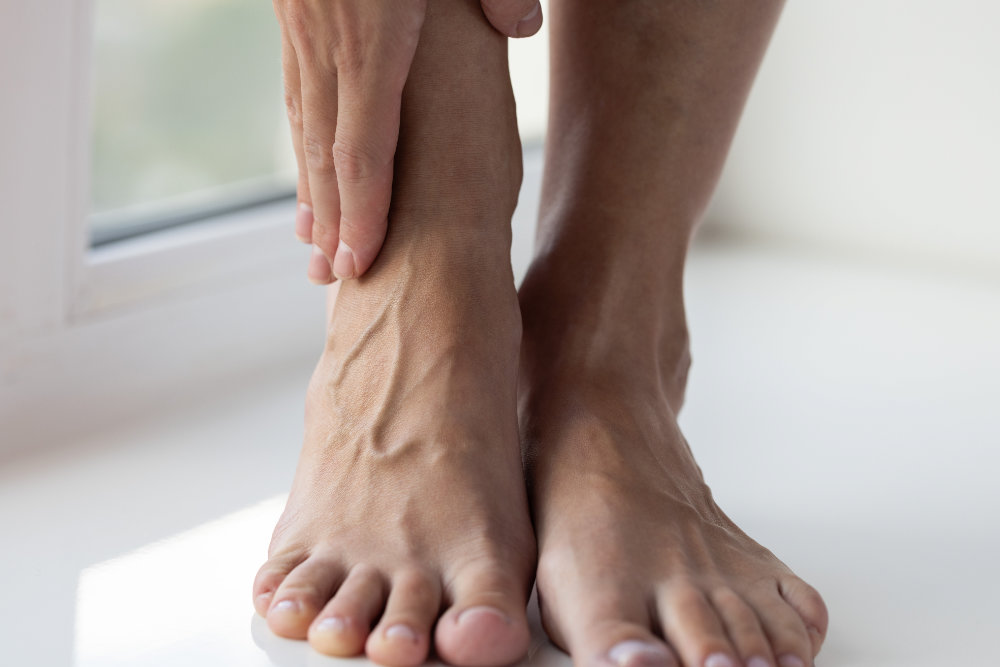
Well before you are confronted with an open ulcer, you will notice less severe signs of venous insufficiency, including varicose veins and swelling. Varicose veins are enlarged, twisted veins (usually blue or purple) that can bulge above the surface of the skin. While varicose veins are not always painful, and while some cases don’t progress into an ulcer, they are still a clear sign that your veins aren’t functioning properly.
Swelling, or edema, often accompanies varicose veins. In many cases of venous insufficiency, swelling affects the ankle and lower leg areas. This swelling usually worsens throughout the day, especially after prolonged standing or sitting, and may temporarily improve when you elevate your legs. You might also experience leg heaviness, aching, throbbing or cramping.
The deceptive part about stage one is that many patients dismiss swelling, leg heaviness and aching as normal fatigue or “just getting older,” when in fact they may be signaling a vein disorder. This is one reason why inspecting the skin for varicose veins is crucial. If the issue is not treated at this stage, the chances of it progressing are high.
Stage 2: Skin Changes and Pre-Ulcerative Signs
Stage two marks a vital turning point in the development of a venous ulcer, beyond which the issue becomes much more difficult and time-consuming to resolve. This is when the pooled fluid and the resulting pressure on your blood vessels begin to visibly manifest on the surface of the skin.
The most noticeable change is discoloration: red, brown, or purple patches may be seen around the ankles and lower legs. These symptoms are often mistaken for an ordinary bruise or incidental skin irritation, but this discoloration won’t fade.
Beyond discoloration, the skin itself begins to change. It may become tight, hard (lipodermatosclerosis), or shiny. The skin may start flaking, and you may develop eczema or dermatitis that causes scaly, inflamed patches. Sensation-wise, you may begin to feel an itching or burning sensation in the affected areas.
All of these signs indicate that the skin is rapidly approaching its breaking point as the pressure and fluid buildup caused by the venous insufficiency damage nearby tissues.
Stage 3: Active Venous Ulcer
If the issue still hasn’t been properly identified and treated by this point, an open wound will develop as the superficial skin loses its integrity completely. Oftentimes, the wound will start out as a tiny sore, but will continue to expand. This type of wound typically presents with uneven borders and a shallow, crater-like appearance.
Venous ulcers tend to weep significant amounts of clear or yellow fluid, meaning bandages and dressings have to be changed frequently. Pain can vary significantly, with some patients experiencing consistent and severe pain while others report surprisingly little discomfort. Typically, elevation of the affected leg can alleviate a significant amount of pain by using gravity to do what the veins can’t.
If the ulcer remains untreated, it can last for months or even years. These ulcers are highly vulnerable to infection, which can cause more serious complications. Often, multiple ulcers will form on the same leg. Even after healing is complete, treatment of the underlying venous disorder is still required to prevent more from forming.
The Importance of Early Intervention
If we haven’t emphasized it enough yet, the progression from varicose veins to active ulceration is very much a predictable and preventable one. At Vein Specialists of the South, our comprehensive approach focuses on treating venous disease before it reaches the ulcer stage. However, even if you’ve already developed an ulcer, proper treatment can heal the wound and prevent recurrence.
Our board-certified specialists use accredited ultrasound technology to accurately diagnose the underlying venous problems and create customized treatment plans designed specifically for your needs. With over 25 years of experience and more than 18,000 procedures performed, we have the expertise to provide you with the most effective care.
Stop the Problem at the Source With Expert Care
If you suspect you have venous insufficiency, every second you wait gives the problem an opportunity to evolve into a more serious issue, including venous ulcers. Our friendly and knowledgeable team is here to help.
Schedule a consultation with Vein Specialists of the South today. Early treatment can prevent the development of venous ulcers and help you achieve Better Veins for Life®.
Call (478) 743-2472 now or complete our online form to book your appointment and protect your legs from venous ulcers.
Frequently Asked Questions
How long does it take for a venous ulcer to heal?
Healing time varies significantly depending on the ulcer’s size, depth and how long it has been present. With proper treatment that addresses the underlying venous insufficiency, smaller ulcers may heal within a few weeks to a couple of months. Larger or long-standing ulcers can take three to six months or longer to heal completely.
Can venous ulcers lead to amputation?
While venous ulcers themselves rarely lead to amputation, serious complications from untreated ulcers can create dangerous situations. Deep infections that spread to the bone (osteomyelitis) or severe cellulitis can, in rare cases, progress to life-threatening conditions.
What’s the difference between a venous ulcer and other types of leg ulcers?
Venous ulcers have distinct characteristics that differentiate them from arterial ulcers or diabetic ulcers. Venous ulcers typically appear on the inner ankle or lower leg, have irregular borders, are shallow and weep fluid. In contrast, arterial ulcers usually develop on the feet or toes, appear “punched out” with defined borders, have a pale or gray base and cause severe pain that worsens with elevation.
Are there lifestyle changes that can help prevent venous ulcers from forming or returning?
Yes, regular exercise, particularly walking, helps improve circulation and strengthen the calf muscle pump that assists venous return. Maintaining a healthy weight reduces pressure on leg veins. Elevating your legs above heart level for 15 to 30 minutes several times daily helps reduce swelling.