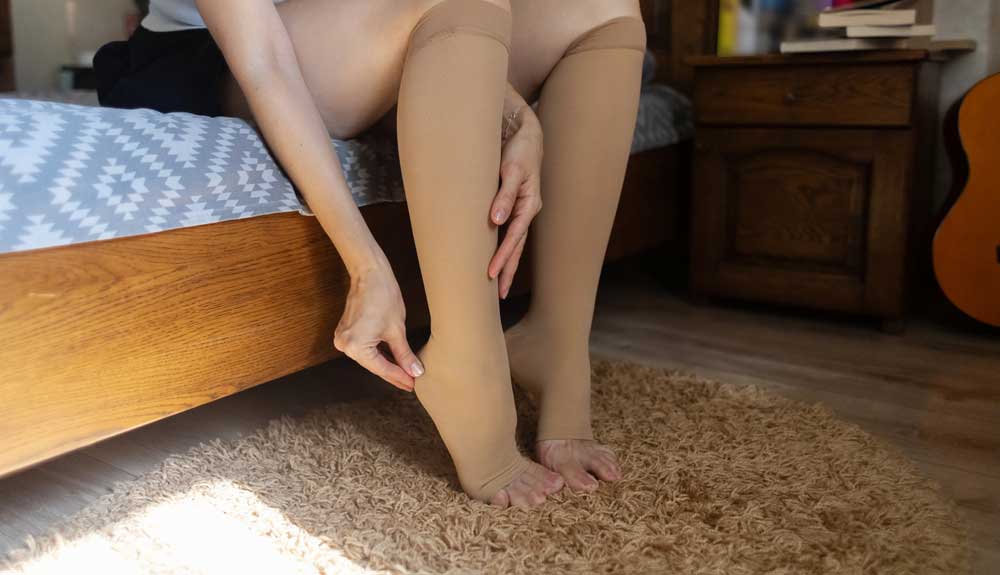
Compression garments are certainly useful when you’re dealing with mild vein-related discomfort, but they are not a complete treatment on their own. If you have varicose veins, which usually present as twisted, blue or purple vessels you can see just beneath the skin, there comes a point where a garment simply cannot solve what is happening beneath the surface. Varicose veins affect tens of millions of American adults, and for many, symptoms worsen over time when the root cause goes unaddressed.
The challenge is knowing when to make the leap from self-care to medical care. To help you recognize where that threshold is, here are five signs your varicose veins deserve the attention of a trained specialist.
Sign #1: You’re Experiencing Pain, Heaviness or Aching That Disrupts Your Daily Life
While it’s true that some people with varicose veins experience little to no leg pain throughout the day, many others do. Underneath the skin, the one-way valves in your veins that prevent the backflow of blood aren’t doing their job, which allows the blood to pool and increase pressure in the affected blood vessels.
This often results in feelings of discomfort that can affect you throughout the day, including heaviness or aching in the legs. Since gravity makes it harder for your already malfunctioning veins to return blood to the heart, these signs often worsen after sitting or standing for longer periods of time.
Sclerotherapy, endovenous thermal ablation and other minimally invasive procedures can address the root cause of that pressure rather than just managing the symptoms with compression and elevation, however helpful those practices may be when you’re dealing with discomfort.
Sign #2: Your Legs or Ankles Are Swelling
Swelling, or edema, in the lower legs and ankles is one of the most telling signs that varicose veins have progressed beyond a surface-level issue. When the above-mentioned pooling effect is allowed to continue past a certain threshold, fluid will then leak into surrounding tissues and cause a puffy, swollen appearance.
Swelling, or edema, in the lower legs and ankles is one of the most telling signs that varicose veins have progressed beyond a surface-level issue. When the above-mentioned pooling effect is allowed to continue past a certain threshold, fluid will then leak into surrounding tissues and cause a puffy, swollen appearance. Since gravity makes it harder for your already malfunctioning veins to return blood to the heart, these signs often worsen after sitting or standing for longer periods of time. While mild cases might seem purely cosmetic, persistent swelling indicates that the root cause needs to be addressed by a trained specialist.
Sign #3: Your Skin Is Changing Color, Texture or Showing Open Sores
Skin changes near varicose veins are a red flag that should never be ignored. Chronic venous insufficiency can cause:
- Brownish or reddish discoloration of the skin (hemosiderin staining)
- Skin that feels hard, leathery or thickened (lipodermatosclerosis)
- Itching or scaling around the ankle area (stasis dermatitis)
- Open wounds near the ankle that are slow to heal (venous ulcers)
Venous leg ulcers are almost always tied to longstanding, untreated venous disease. Once ulcers develop, healing requires aggressive intervention and can take months. Treating varicose veins before skin changes occur is far simpler and less costly than letting the problem progress to this stage.
If you notice any of these skin changes, schedule a vein evaluation as soon as possible.
Sign #4: A Vein Has Bled or You’ve Noticed a Bleeding Episode
Varicose veins are very superficial and carry a higher pressure than healthy veins. That combination means they are vulnerable to bleeding, sometimes from very minor trauma like bumping your leg or even shaving. A varicose vein can also rupture on its own. Bleeding is an uncommon, but not unheard of, issue among people with varicose veins.
Bleeding from a varicose vein can appear dramatic because the naturally higher pressure inside the vein pushes the blood out quickly. For many patients, a bleeding episode is what first brings them to the ER. While applying firm pressure and elevating the leg is usually enough to stop the bleeding, it is a serious warning sign that the vein walls have become fragile and that medical evaluation is overdue.
An appointment with a vein specialist should follow any bleeding episode from a varicose vein.
Sign #5: You Have a Hard, Painful Lump Along a Vein (Possible Superficial Thrombophlebitis)
If a section of varicose vein becomes hard, warm, red and tender to the touch, you may be experiencing superficial thrombophlebitis, which is a blood clot that has formed in the superficial venous system. While superficial clots are generally less dangerous than deep vein thrombosis (DVT), they are still a potentially serious concern.
Superficial thrombophlebitis can extend into the deep venous system in some cases, significantly raising the risk of pulmonary embolism. A vein specialist can use ultrasound to evaluate the extent of the clot and determine the appropriate course of action.
Why Choose Vein Specialists of the South?
At VSS, your care is led by Dr. Kenneth Harper, one of the first physicians in the country to earn Diplomat status with the American Board of Venous and Lymphatic Medicine (ABVLM) and board-certified by the American Board of Surgery. Dr. Harper has evaluated more than 22,000 patients and performed over 30,000 vein procedures since 2000.
The VSS vascular ultrasound lab is accredited by the Intersocietal Accreditation Commission (IAC), ensuring accurate diagnostic imaging that meets rigorous quality standards. VSS research has also been recognized at the Annual Congress of the American College of Phlebology, including a Platinum Research Award in 2007. VSS research has also been recognized at the Annual Congress of the American College of Phlebology, including a Platinum Research Award in 2007.
From sclerotherapy for spider veins to sclerotherapy for varicose veins, endovenous thermal ablation, VenaSeal, and microphlebectomy, the VSS team builds a comprehensive, individualized treatment plan for every patient. The goal at VSS is for you to enjoy Better Veins for Life®.
Ready for a Treatment Plan That Really Works?
If any of the signs above sound familiar, compression socks alone are not going to completely resolve the issue. A conversation with a specialist is the best place to start. The team at Vein Specialists of the South is here to evaluate your veins, explain your options, and create a treatment plan designed around your specific needs and goals.
Walk in. Walk out. With little to no downtime®.
Call (478) 743-2472 or schedule your consultation online today to take the first step toward Better Veins for Life®.
Frequently Asked Questions
When should I stop using compression socks and see a doctor for varicose veins?
Compression socks are appropriate for mild discomfort and prevention, but you should see a vein specialist if you experience pain or heaviness that interferes with daily activity, swelling in the legs or ankles, skin color changes, any bleeding episode or a hard, tender lump along a vein. These symptoms suggest underlying venous insufficiency that requires medical evaluation and treatment.
Are varicose veins dangerous?
Varicose veins can range from a cosmetic concern to a serious medical condition, depending on their severity and progression. Untreated varicose veins can lead to skin ulcers, bleeding, superficial thrombophlebitis and, in some cases, complications involving the deep venous system. Early evaluation by a vein specialist helps prevent these outcomes.
Does insurance cover varicose vein treatment?
Most varicose vein treatments are covered by insurance when symptoms like pain, swelling or skin changes are documented and conservative therapies have been tried. Cosmetic treatments for spider veins are typically not covered. The VSS team can help you understand your coverage options during your consultation.
How are varicose veins diagnosed?
The gold standard for diagnosing varicose veins and the underlying venous insufficiency causing them is a venous duplex ultrasound. This noninvasive imaging test maps the venous system, identifies faulty valves, and reveals any areas of blood pooling or reflux. At VSS, all ultrasound studies are performed in an IAC-accredited vascular lab by Registered Vascular Technologists (RVTs) and Registered Phlebology Sonographers (RPhS). Dr. Harper is also a Registered Phlebology Sonographer (RPhS) and a Registered Physician in Vascular Interpretation (RPVI), so you can trust that our team brings the highest level of expertise to your venous diagnostic care.
What treatments are available for varicose veins at Vein Specialists of the South?
VSS offers a full spectrum of minimally invasive varicose vein treatments, including sclerotherapy (both liquid and foam), ultrasound-guided sclerotherapy, endovenous thermal ablation, VenaSeal and ambulatory phlebectomy. Dr. Harper and the VSS team design comprehensive, individualized treatment plans based on each patient’s anatomy, symptoms and goals.
How long does varicose vein treatment take and what is recovery like?
Most VSS varicose vein procedures take 30 to 45 minutes and require no general anesthesia or hospital stay. Patients can walk out of the office immediately after treatment. Recovery guidelines vary by procedure but typically involve wearing compression stockings for a short period, avoiding strenuous activity and hot baths for a few days, and walking regularly to promote healthy circulation. If you are ready to take the next step, call (478) 743-2472 or schedule your consultation online today.